
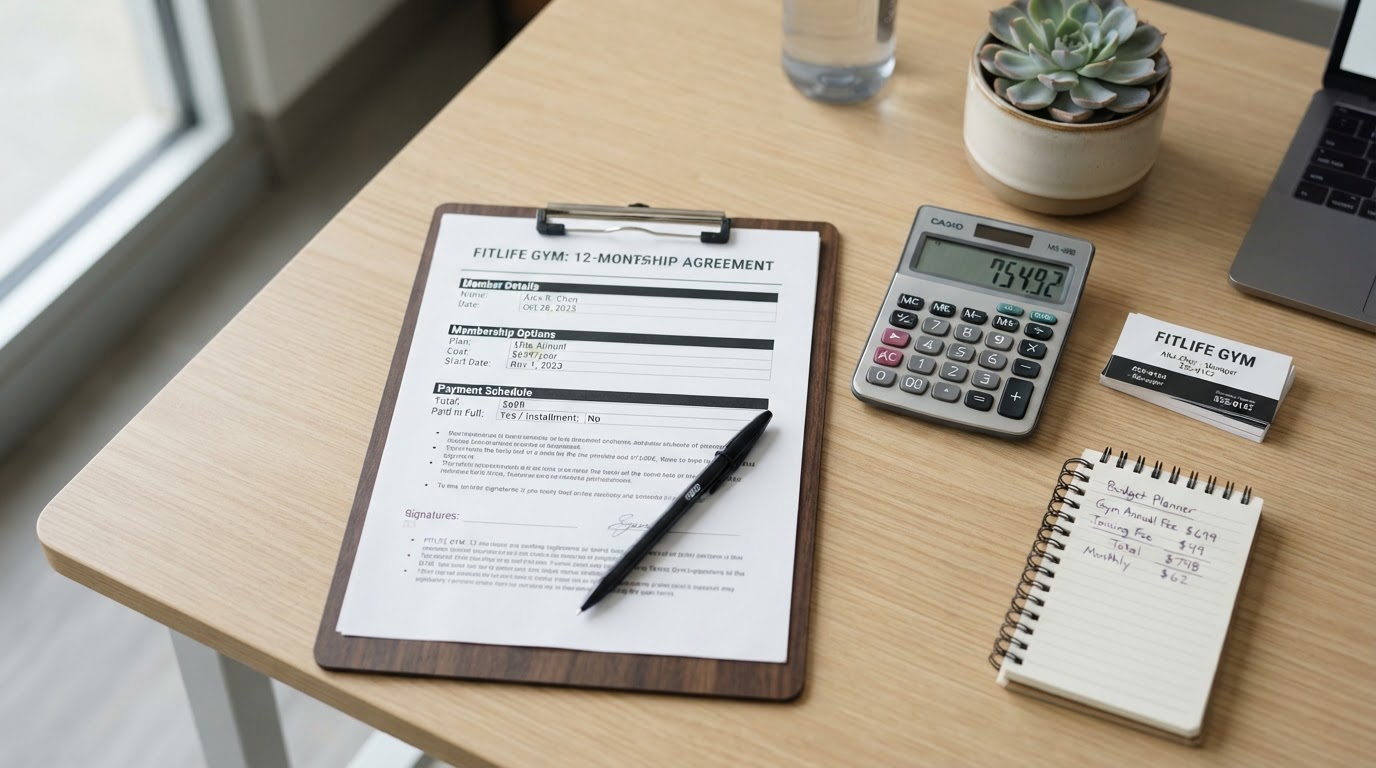
Hidden Fees in Budget Gym Contracts: The Complete Buyer's Checklist
2026-10-08 · 7 min read
Learn about enrollment surcharges, rate-guarantee fees, cancellation rules, and how to negotiate zero down on budget memberships.
Many budget gyms advertise promotional $1 enrollment rates, but later bill an annual club improvement fee after 60 to 90 days. Always ask for a transparent breakdown of first-year dues before you hand over a payment method. The advertised monthly price is only one component of your total cost, and the difference between a true $10 plan and a $10 plan with $150 in add-on fees can be substantial over a year.
Start by requesting the full first-year cost in writing. A reputable front desk staffer can itemize the enrollment fee, the first month, any prorated partial month, the annual maintenance fee, and any keyfob or card replacement charges. If a club cannot or will not provide this breakdown, treat that as a warning sign. The best budget chains publish their fee schedules online and train staff to explain them clearly.
Ensure you review keyfob replacement charges, certified mail cancellation mandates, and billing change processing costs before signing your agreement. Some contracts require you to send a certified letter to a corporate address to cancel, which adds postage and time costs, and a few stipulate a 30- or 60-day notice period during which you continue to be billed. Read the cancellation clause in full and ask what documentation is required.
Watch for rate-guarantee or price-lock add-ons. These optional fees, often $1 to $5 per month, promise to freeze your monthly dues for a set number of years. For most members this is a marginal value, but if you plan to stay long-term and the chain has a history of raising rates, it can pay for itself. Decide based on your expected tenure, not the sales pitch.
Beware of personal training bundles folded into the sign-up. Staff at budget gyms are often incentivized to sell sessions, and a 'complimentary fitness assessment' can become a high-pressure upsell. You are never obligated to buy training to access the gym floor. If you want guidance, ask about single-session rates and compare them to independent trainers or online coaching before committing to a package.
Timing your sign-up during major holiday promotional weeks like New Year's, Memorial Day, or Labor Day often completely waives enrollment fees. Many chains also run back-to-school and January resolution promotions that drop the joining cost to zero or $1. If you can wait a few weeks for the next promotional window, the savings on enrollment alone can cover several months of dues.
Keep a copy of your signed agreement and the fee disclosure. If a charge appears that was not disclosed, you have documentation to dispute it. Most states require gyms to honor the terms you signed, and a clear record is your best protection against unexpected billing surprises.
Ask whether the annual fee auto-renews and whether it can be waived by maintaining a certain tenure or by upgrading to a higher tier. Some chains forgive the maintenance fee after a set number of months of continuous membership, or bundle it into a slightly higher monthly rate that works out cheaper over time. Knowing these options lets you choose the structure that minimizes your true annual cost rather than reacting to the first fee that appears on your statement.
Find an affordable gym near you
Browse our directory of budget gyms and low-cost health clubs across the US and Canada.

Related Fitness Guides
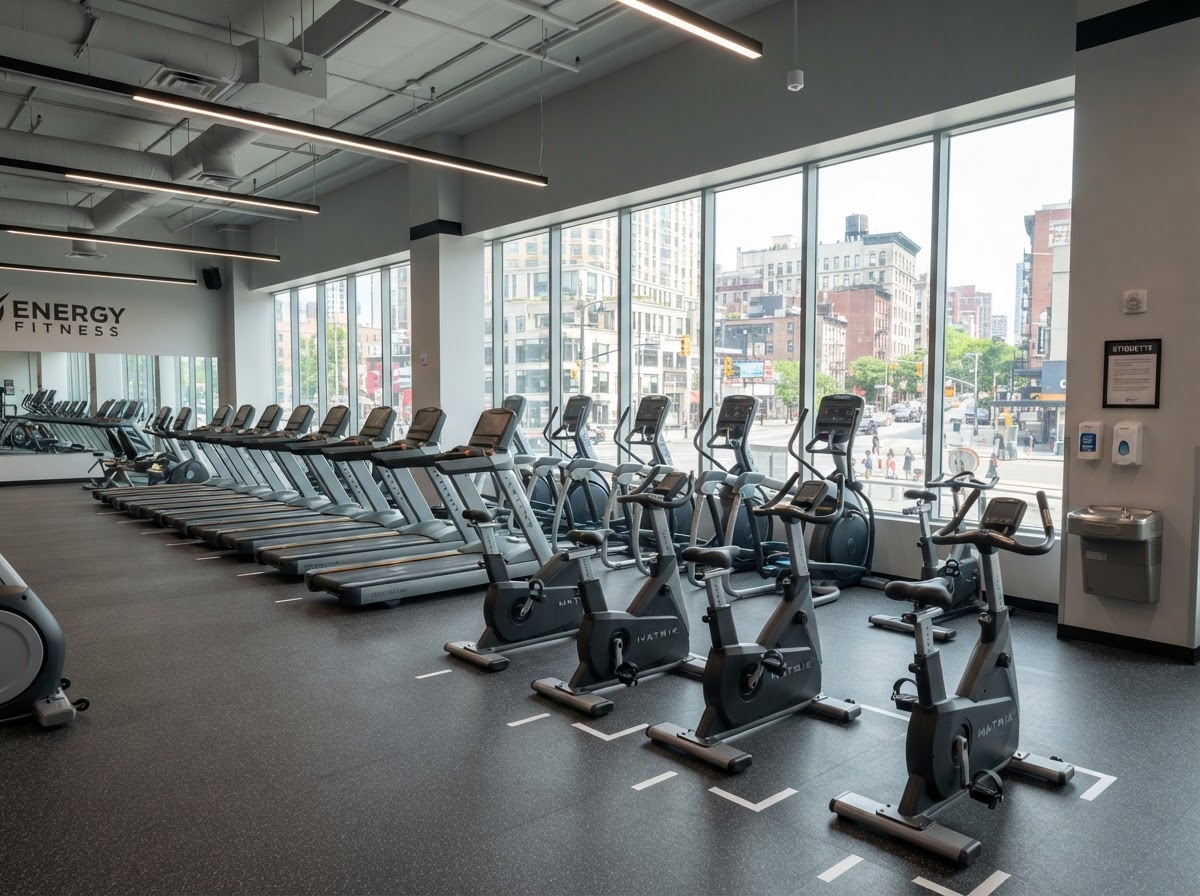
How to Find and Choose the Best Gym Membership Under $15/Month
Discover what national and regional low-cost gym chains offer in basic dues, and how to avoid hidden annual maintenance fees.

Cross-Border Fitness: Navigating US & Canada Gym Chains with Global Passports
How business travelers and snowbirds can use reciprocal membership privileges across United States and Canadian fitness locations.

The Psychology of Gym Pricing: Why Low-Cost High-Volume Gyms Work for You
How the high-volume low-price (HVLP) business model allows top fitness centers to buy multimillion-dollar equipment while charging $10/mo.